{{ p.name }}
CHARACTERISTICS
{{ t }}
CORE NEEDS
{{ t }}

MARTA is Atlanta's public transit system that combines bus, rail, and streetcar services.
BRT is a transit system that uses buses to provide efficient and reliable service — with dedicated lanes, traffic signal priority, and enhanced stations.
MARTA is implementing its first BRT system connecting parts of downtown Atlanta, and construction will start in the summer of 2025.
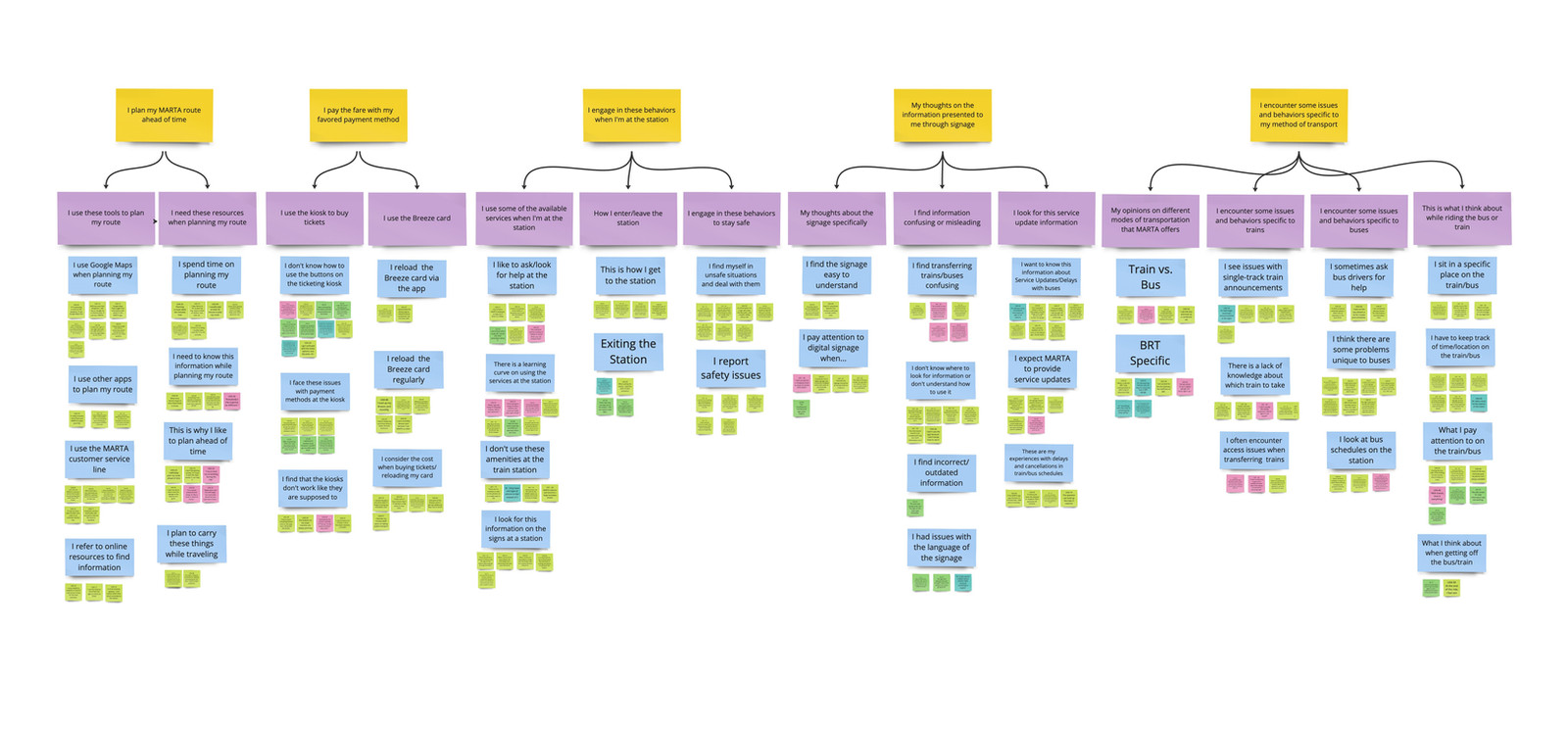
Since the BRT lines do not exist yet, we based our research on existing MARTA bus and train riders, using a combination of qualitative and quantitative methods.
{{ method.lead }}
{{ method.body }}
{{ method.limit }}
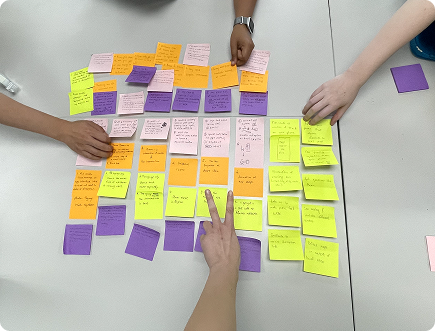
We examined the data to understand the typical experiences of riders and to spot opportunities for a brand new transport line.
{{ t }}
{{ t }}
Through our initial round of ideation, we identified three key design requirements.
{{ r.text }}
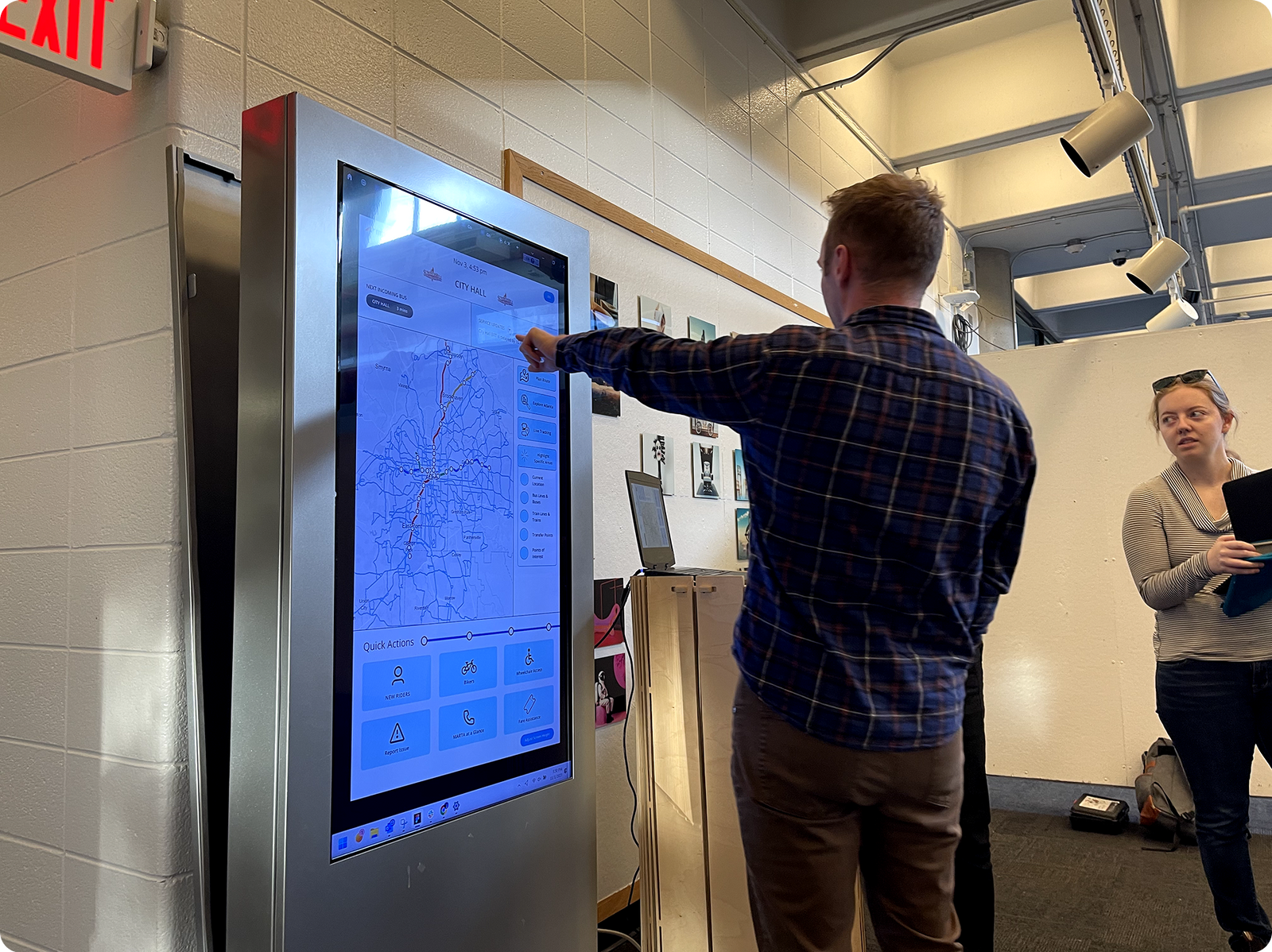
When we tested our initial ideas, every participant gravitated toward using a graphical map as a central focus.

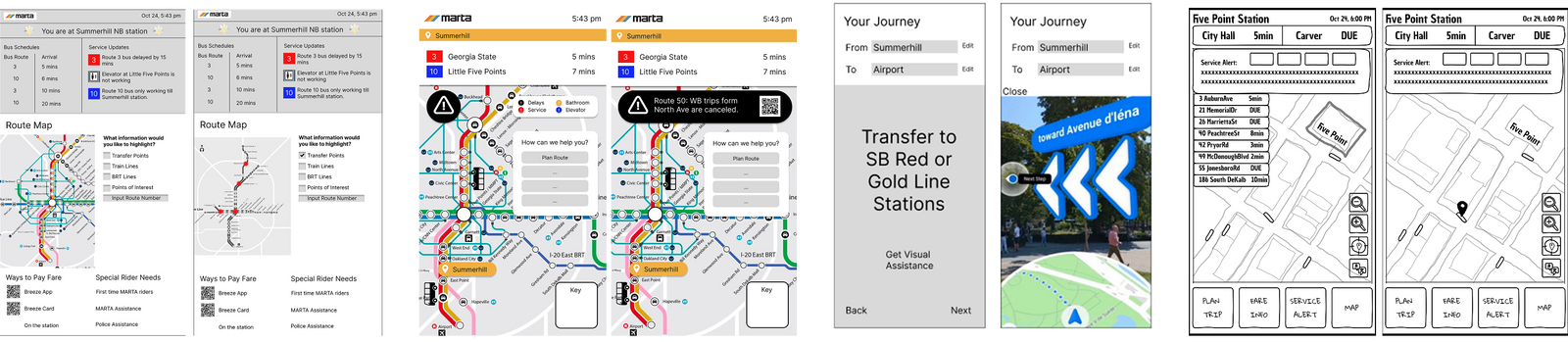
“{{ q }}”
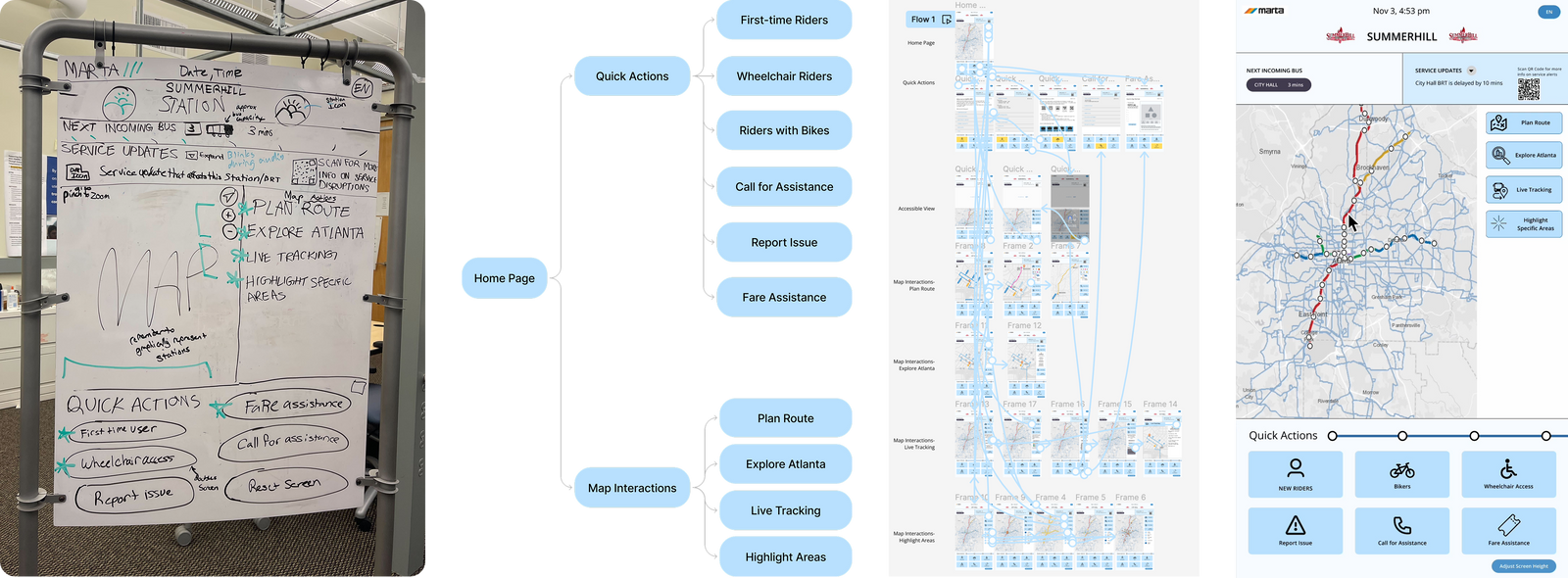
Next, we built a framework to incorporate all the features we had identified as important, with the map as the central piece. We also did a bunch of whiteboard drawings to understand the scale and placement of various features.
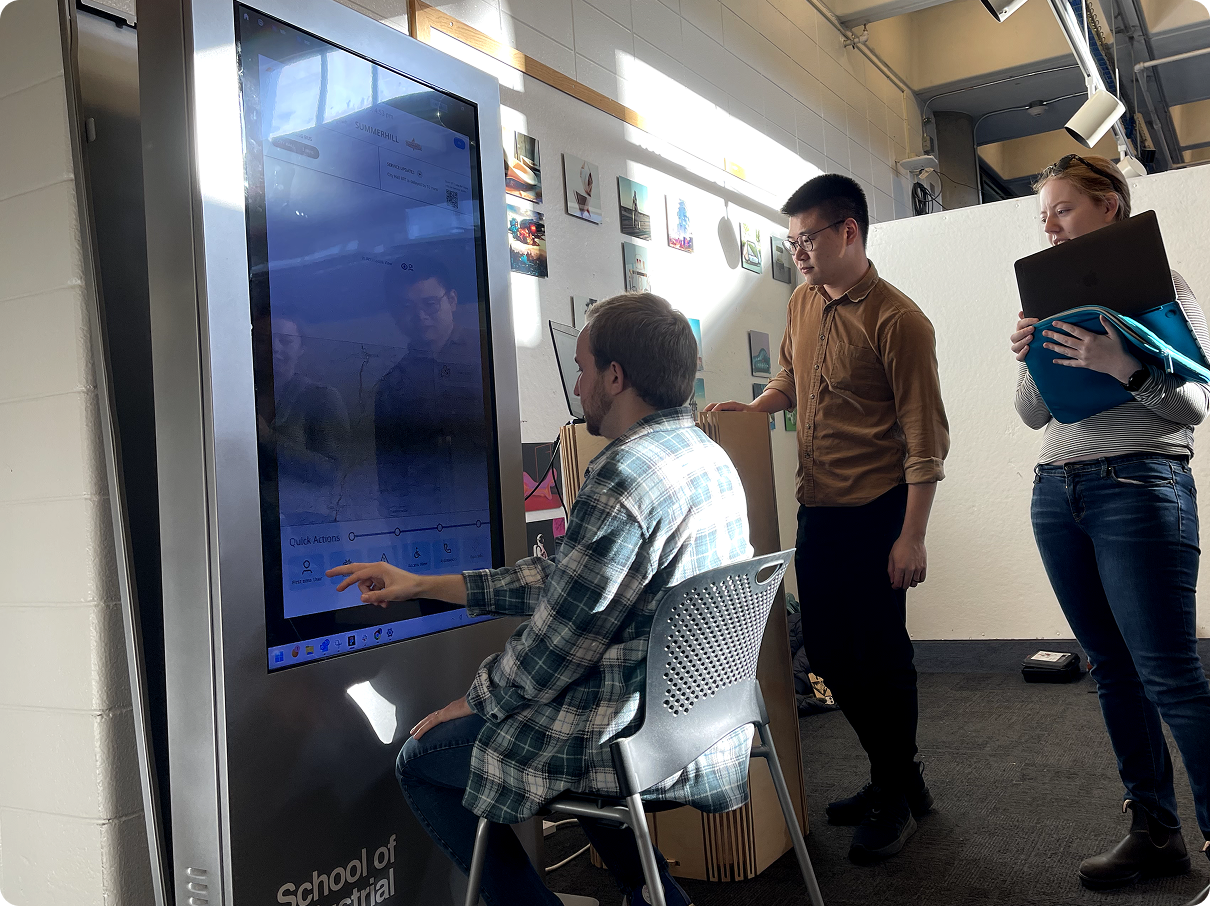
Our user testing sessions highlighted various strengths and weaknesses in the system.
{{ r.text }}
{{ feature.need }}
{{ feature.aff }}
{{ u }}
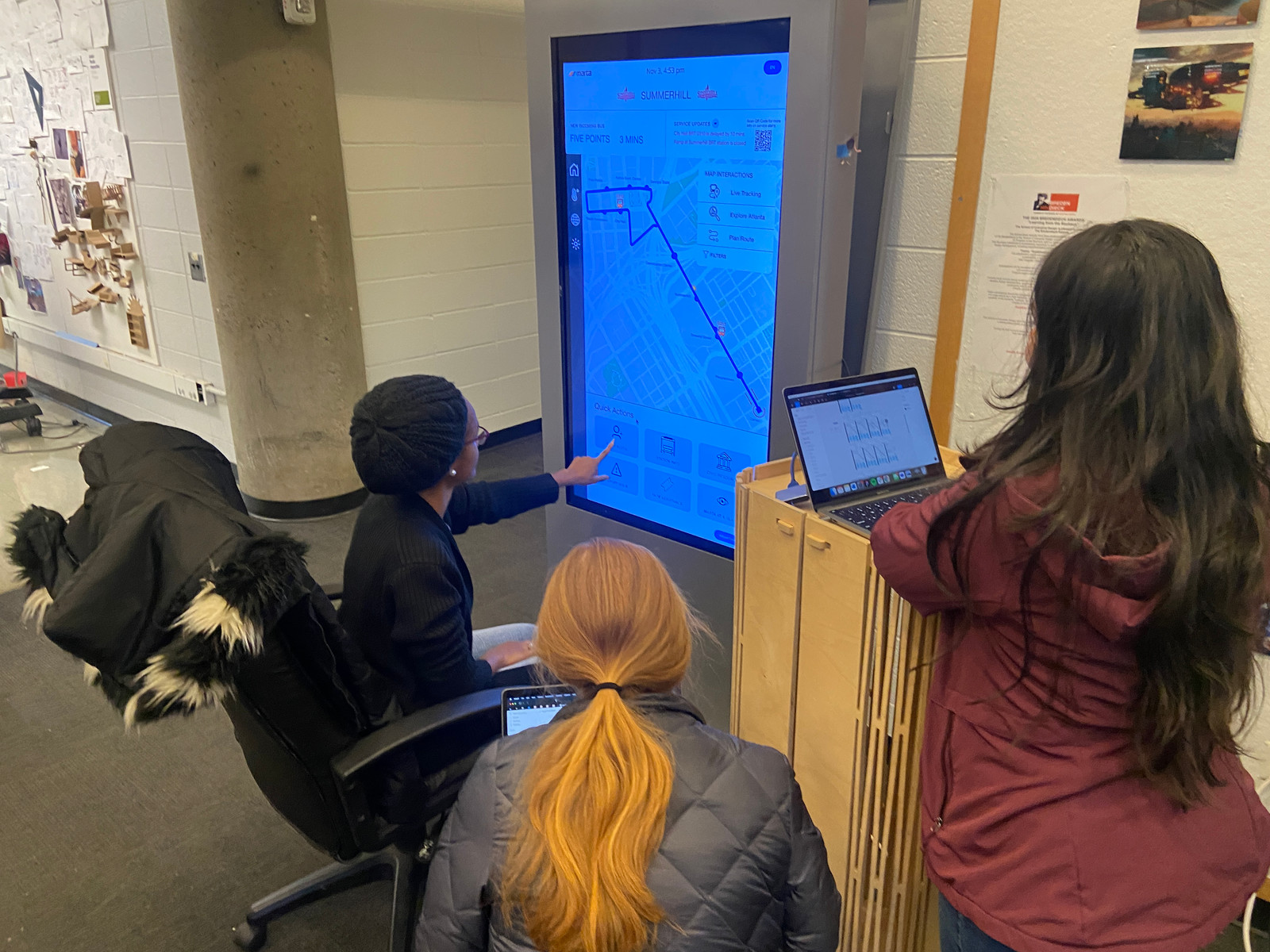
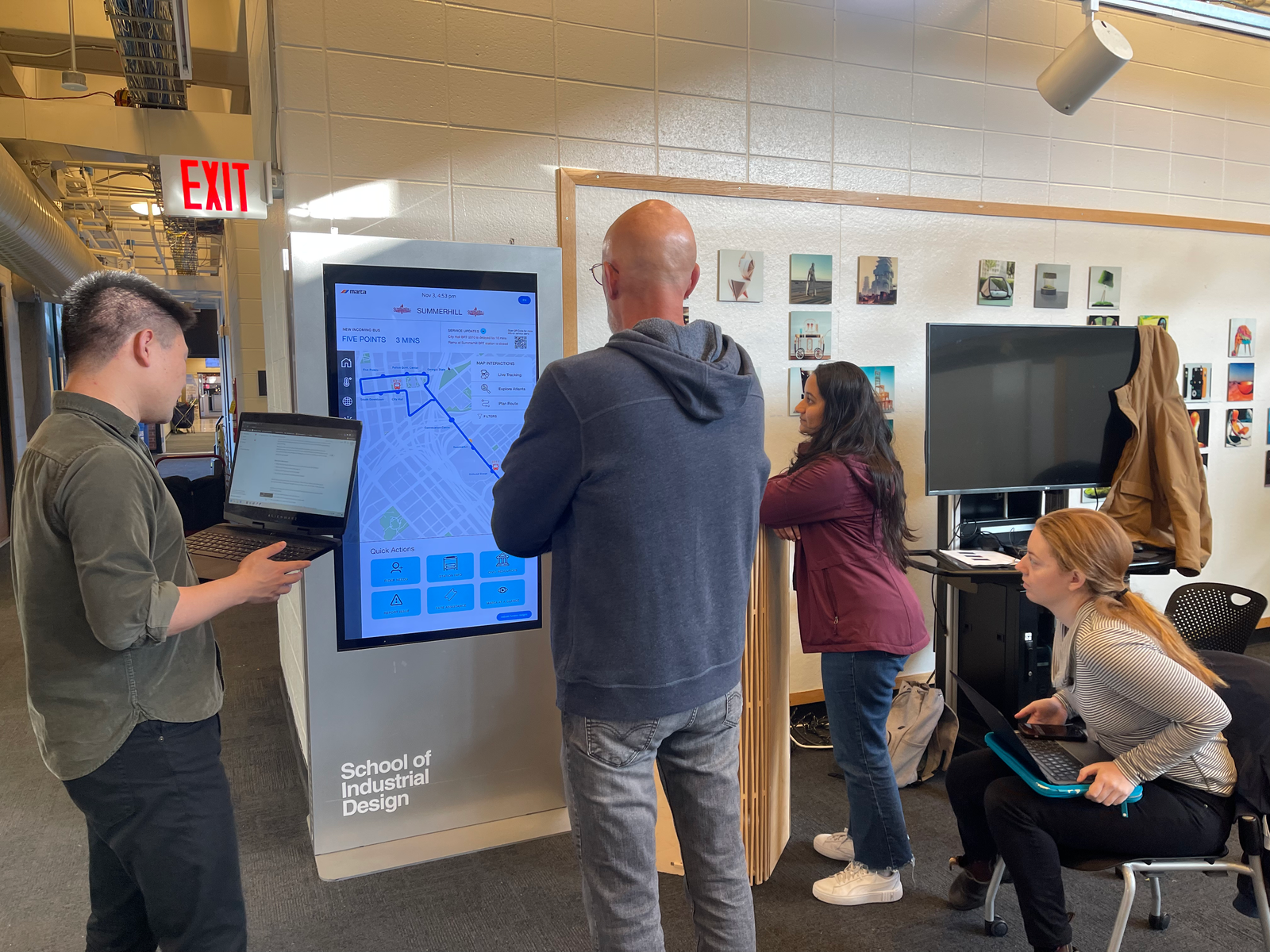
For the second round we concentrated on making meaningful 'Quick Actions' and 'Map Interactions' menu items.
We based our testing on tasks to accurately identify problems in frequently completed activities, timing users and recording their preferred pathways.
{{ t.task }}
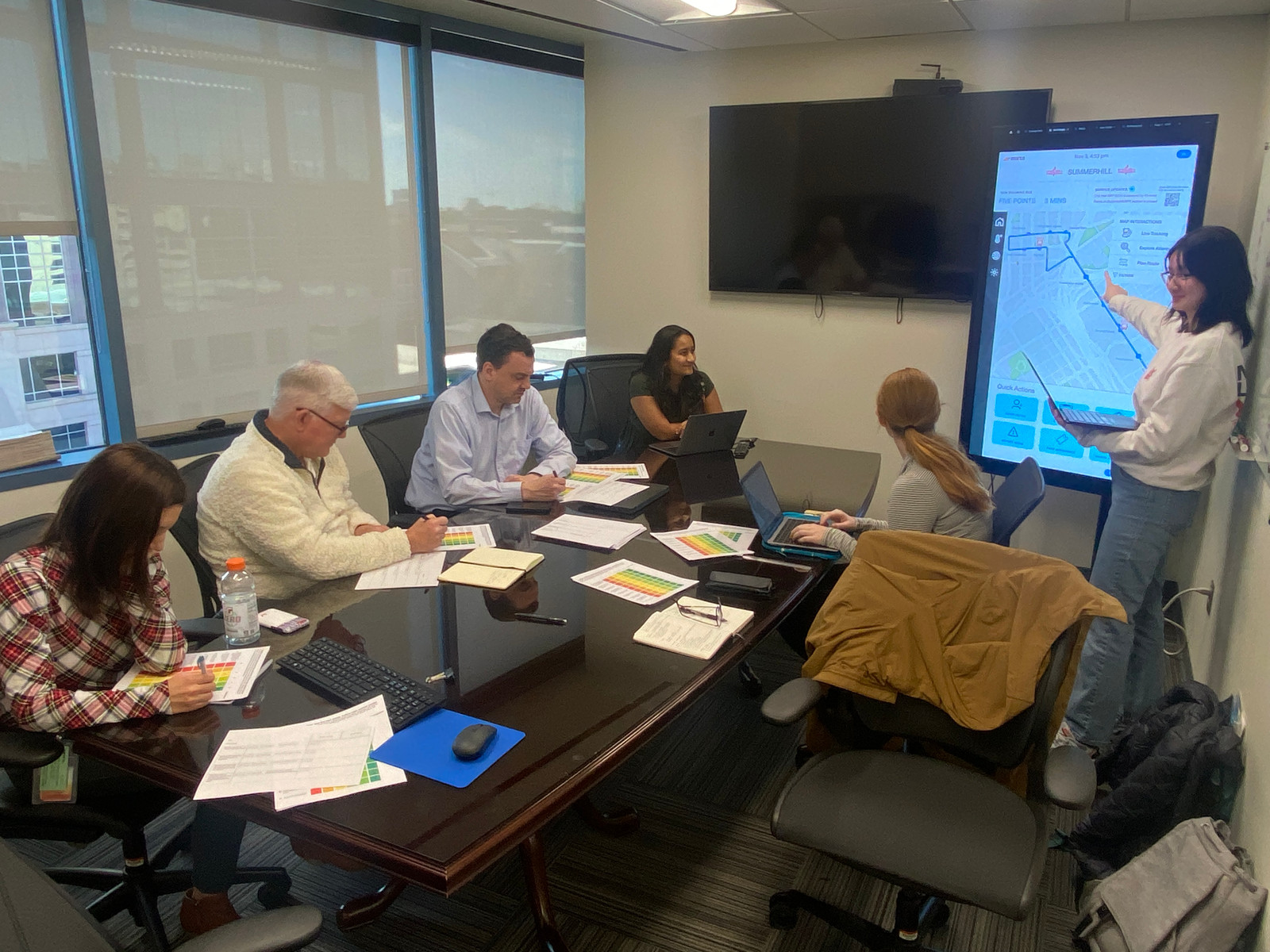
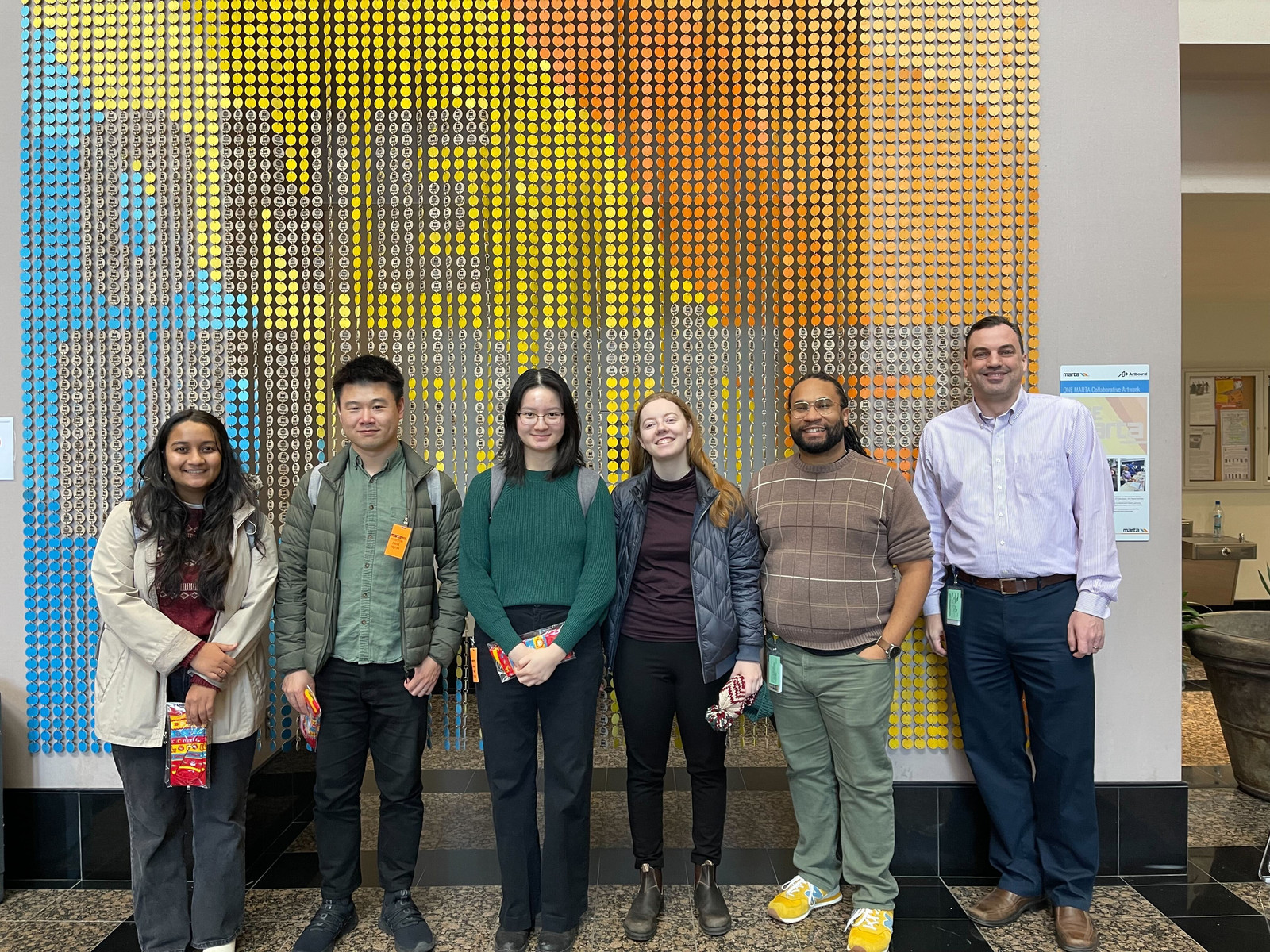
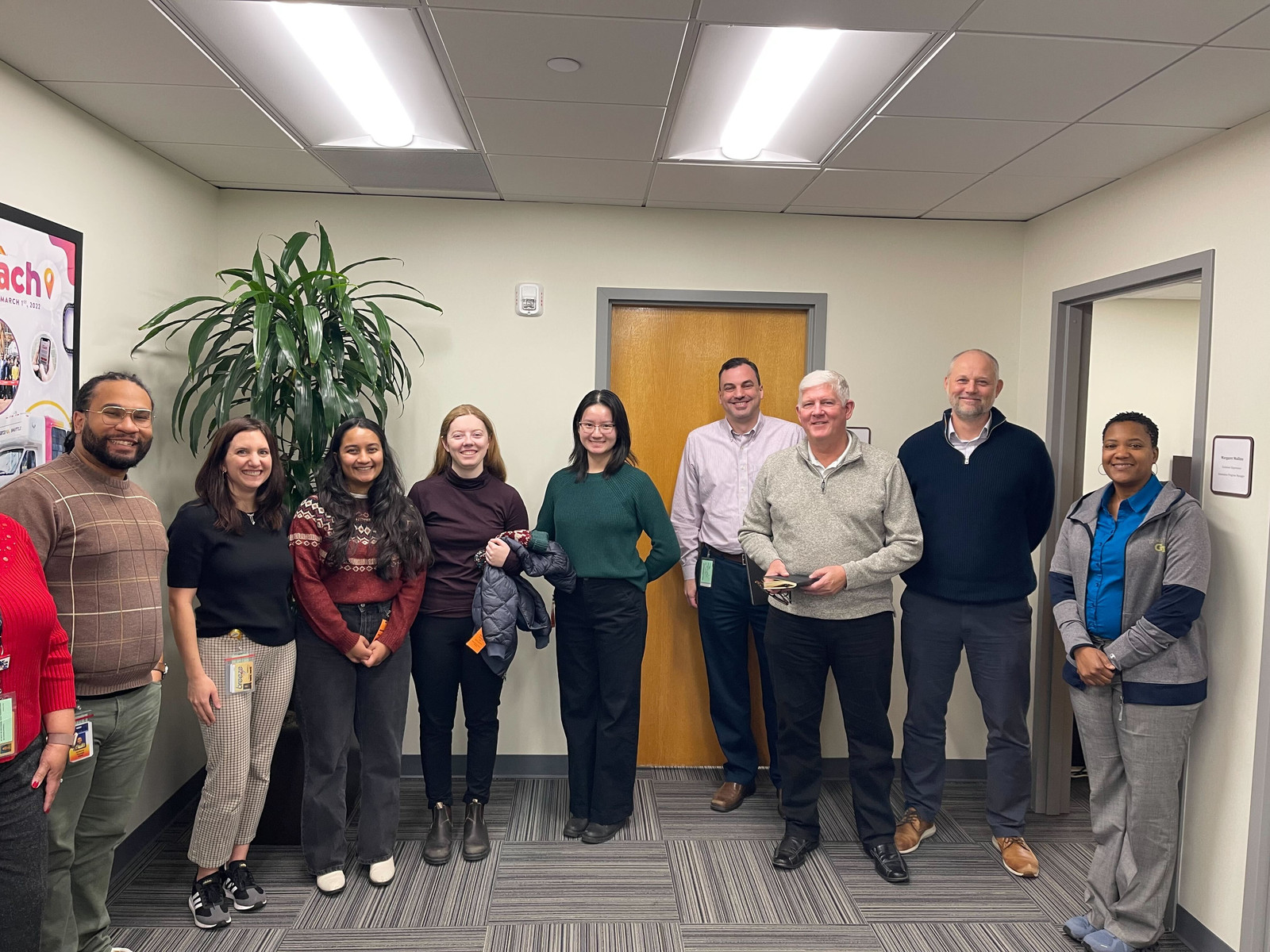
We visited MARTA HQ in Lindbergh and presented our designs to 5 experts in the Customer Technology department.
We asked them to evaluate our designs against 3 heuristics outlined by NN/g. Each heuristic had 9–11 subcategories.
{{ heur.desc }}
{{ f.text }}
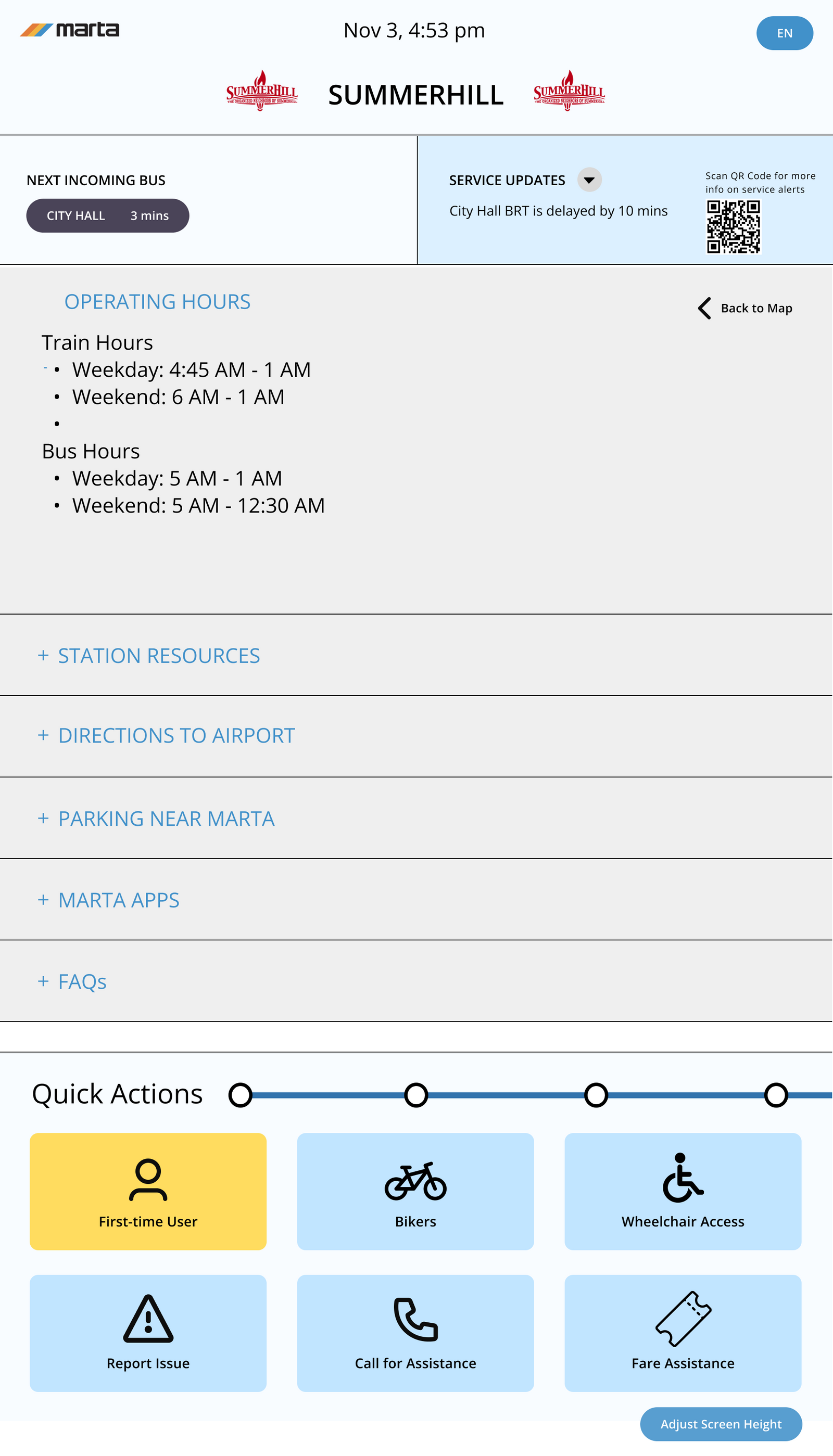
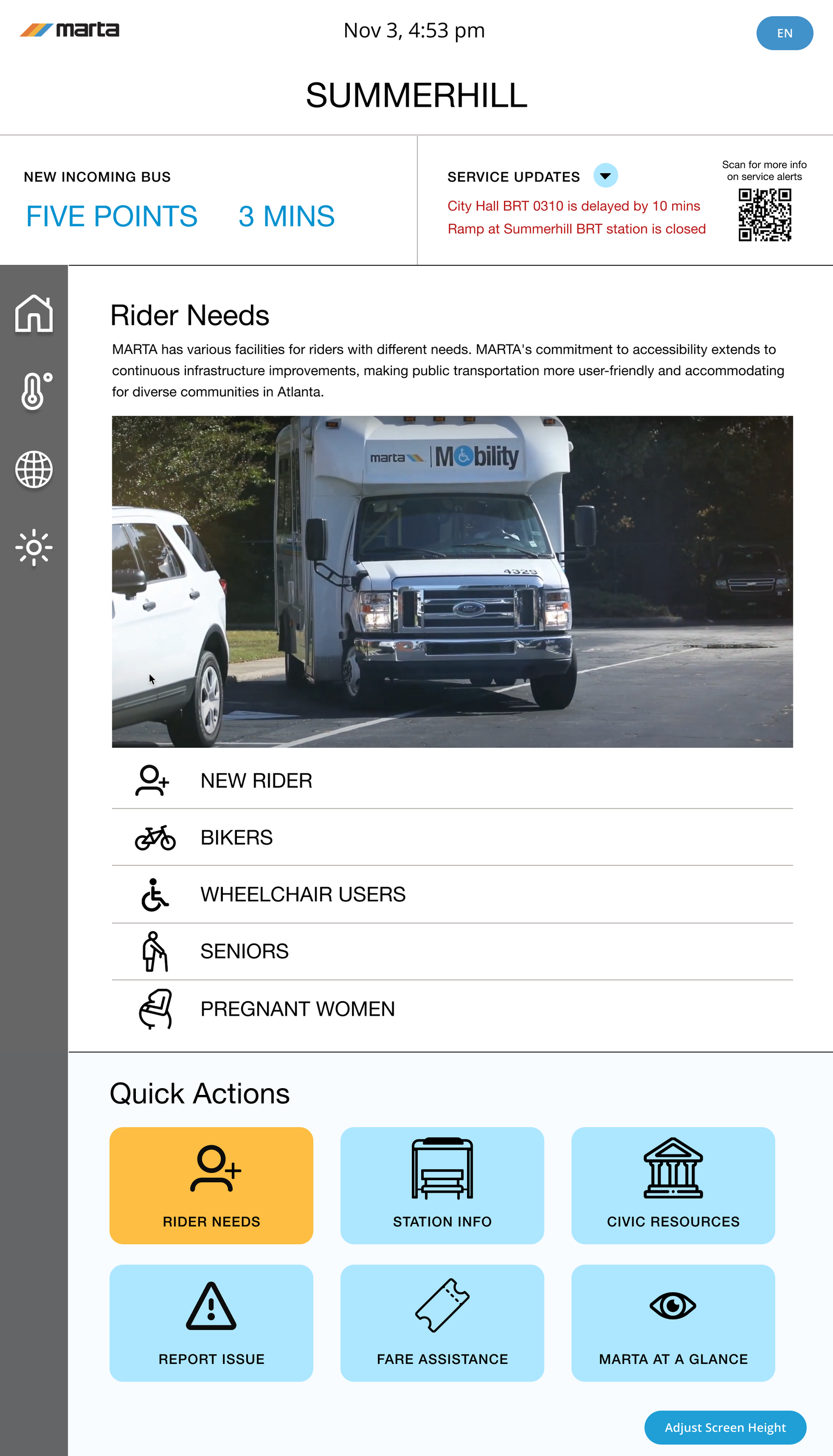
The transit map anchors every interaction, with quick actions always within reach.
Our collaboration with MARTA ended with recommendations and next steps — our designs were taken over by the team to implement at their stations.
This was an immense learning experience in user testing for me. Here are some key takeaways.
{{ l.body }}