IMPACT AT A GLANCE

A concise view of the breadth, reach and human evidence behind my consulting work.

{{ n1 }} RESEARCH PARTICIPANTS INTERVIEWED OR ANALYZED
{{ n2 }} CLIENT ENGAGEMENTS ACROSS INDUSTRIES
{{ n3 }} COUNTRIES REPRESENTED IN RESEARCH
THE ROLE

Research, strategy and design across a shifting client landscape.

At Zilker Trail, I moved between researcher, facilitator and designer. Each engagement had a different industry, product maturity and stakeholder need. My consistent role was to turn incomplete evidence and complex behavior into clear, client-ready direction.

THREE CONNECTED MODES OF PRACTICE
40% RESEARCH
40% STRATEGY
20% DESIGN
THREE PRACTICE AREAS

My work connected emerging AI technology, global research and end-to-end product improvement.

01
PRACTICE AREA

Emerging AI Experiences

I studied how people make sense of new AI capabilities, where they see utility, where trust breaks down and how product teams can preserve human agency while moving quickly.

Google Maps GOOGLE MAPS

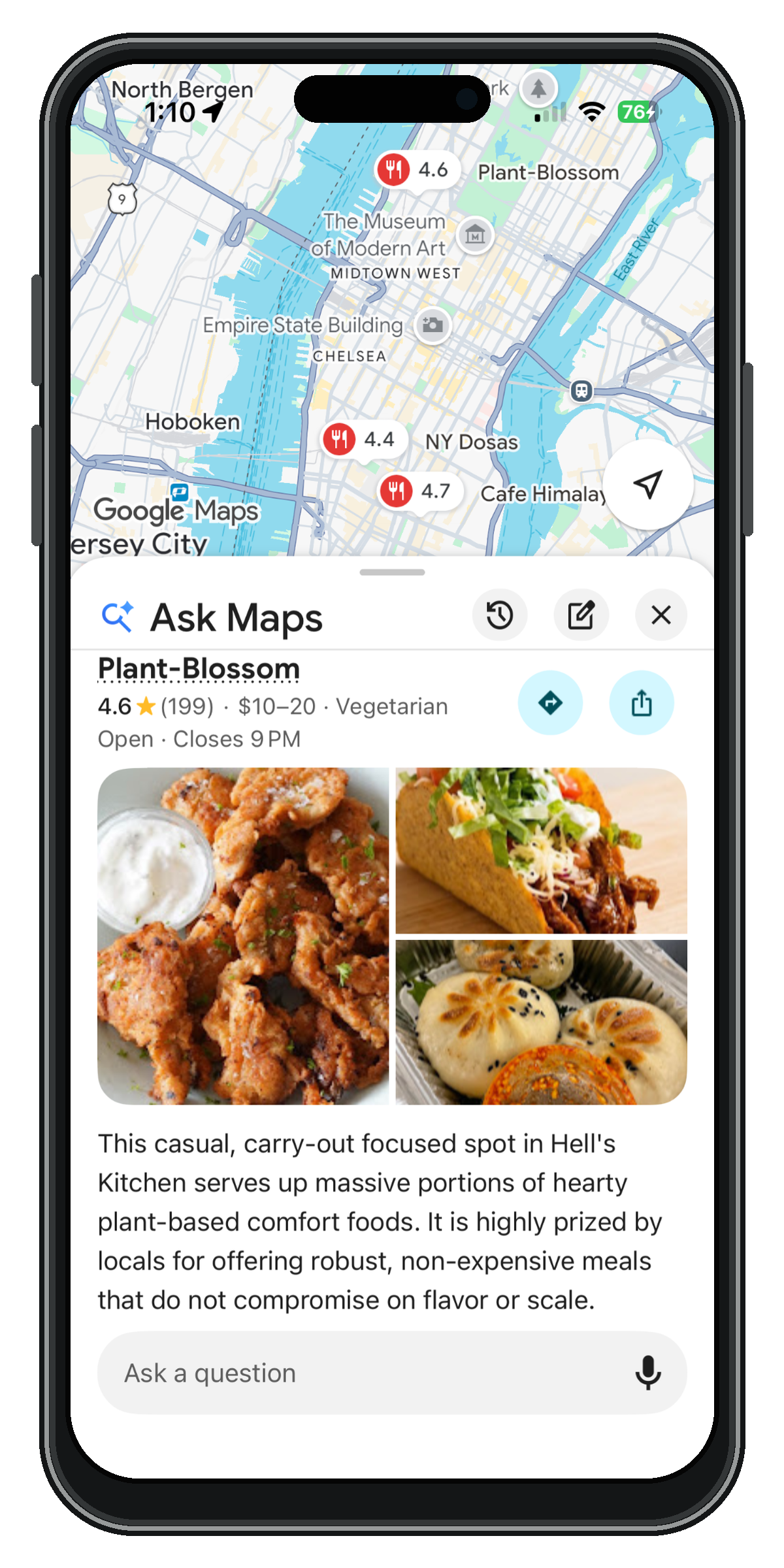
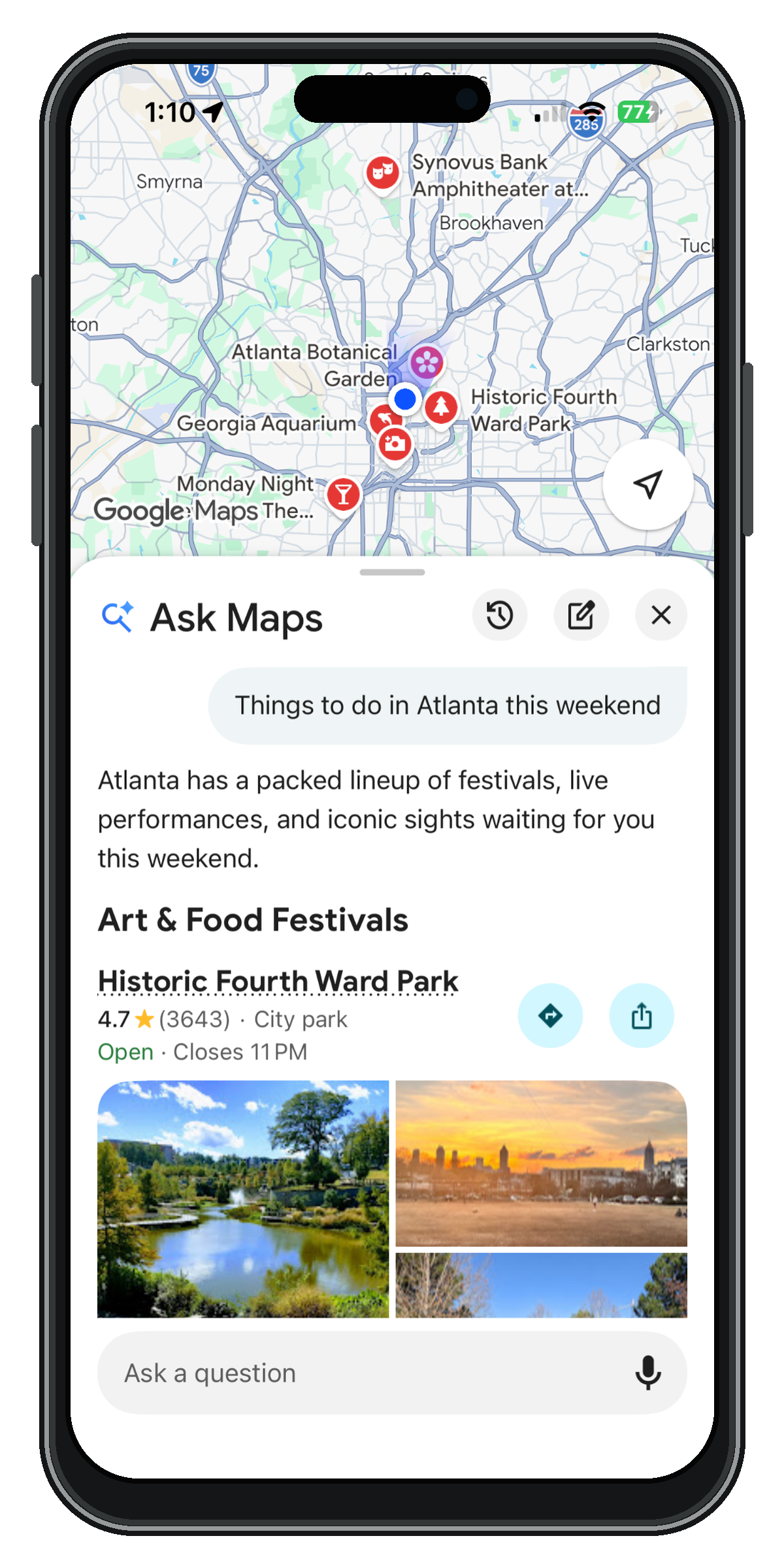
Ask Maps

Moderated evaluation of two conversational discovery concepts in the U.S. and India.

AI DiscoveryModeratedMulti-Market
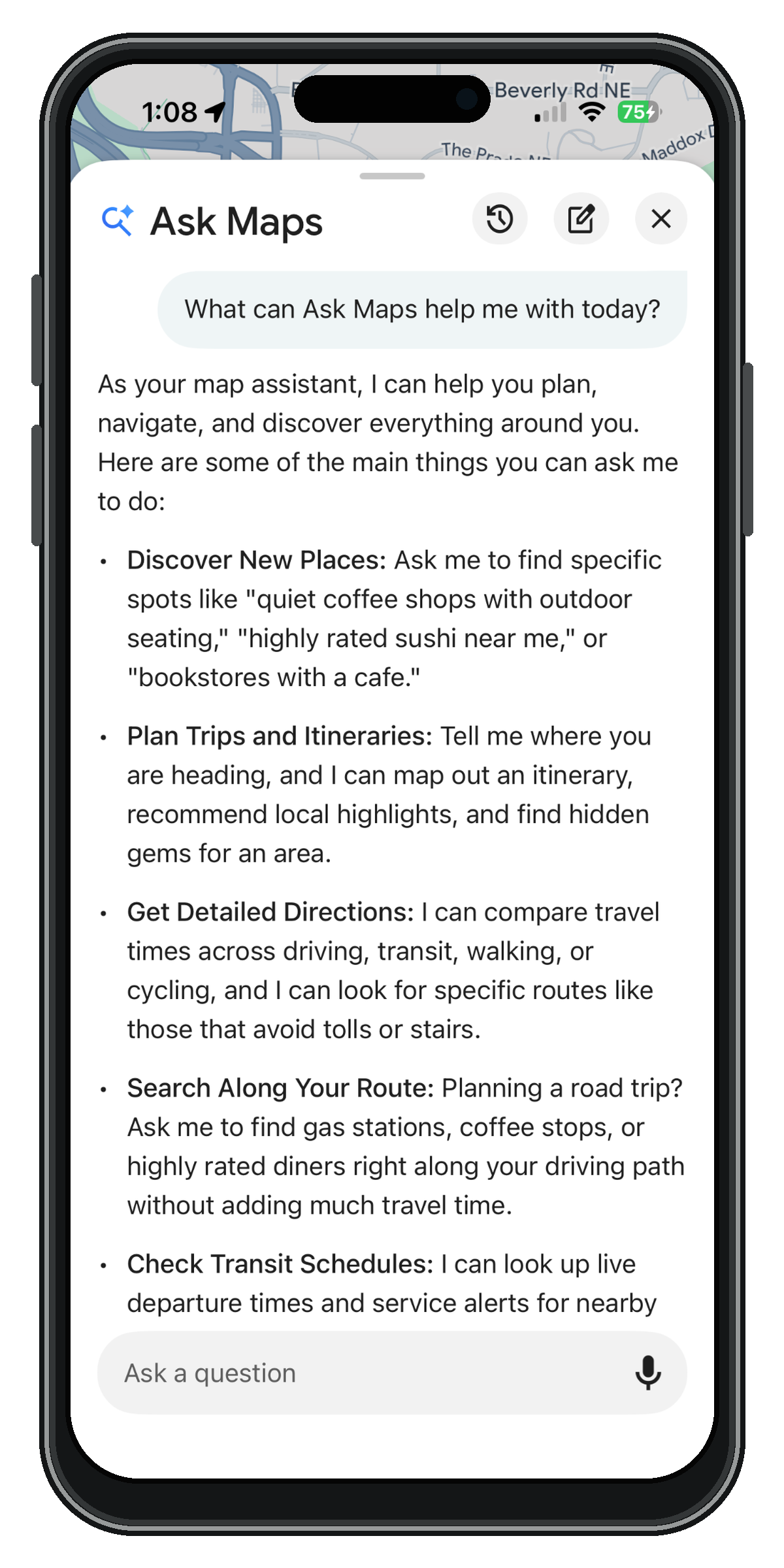
Ask Maps overviewAsk Maps place resultAsk Maps weekend results

Images show publicly available experiences for context. They don’t represent the confidential work or recommendations from these engagements.

What I investigated

How suggested prompts, open chat, visual organization, and contextual details shape the transition from inspiration to a confident place decision.

People wanted the interface to meet them at their current level of specificity.

Useful visual organization

4.33/5

Clear imagery, concise summaries, ratings, price, hours and distance made AI results feel more actionable.

Google Photos GOOGLE PHOTOS

Localizing emerging AI experiences

A three-month program to test emerging product concepts for an audience in an Asian country.

LongitudinalAI conceptsInternational audience
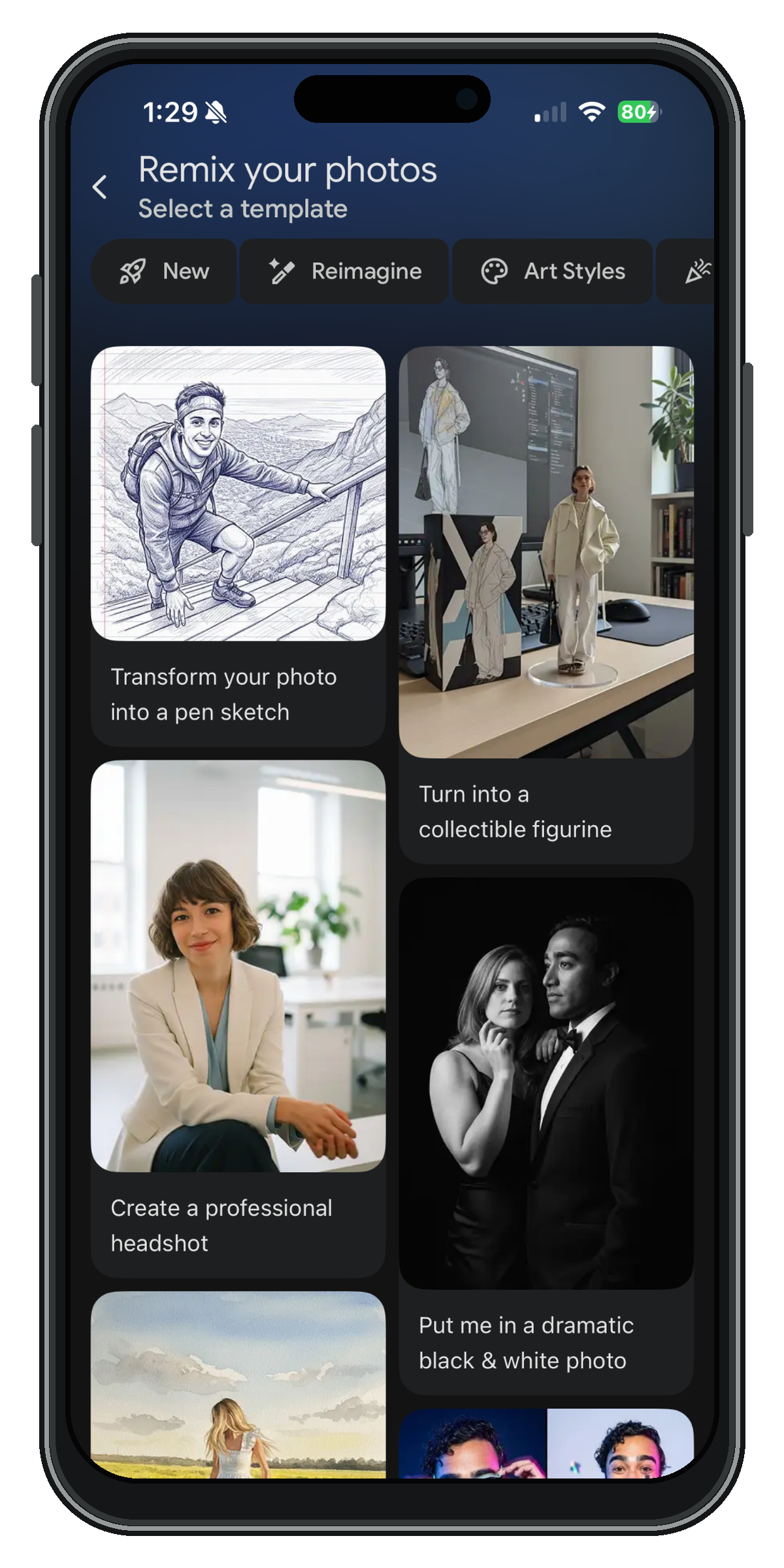
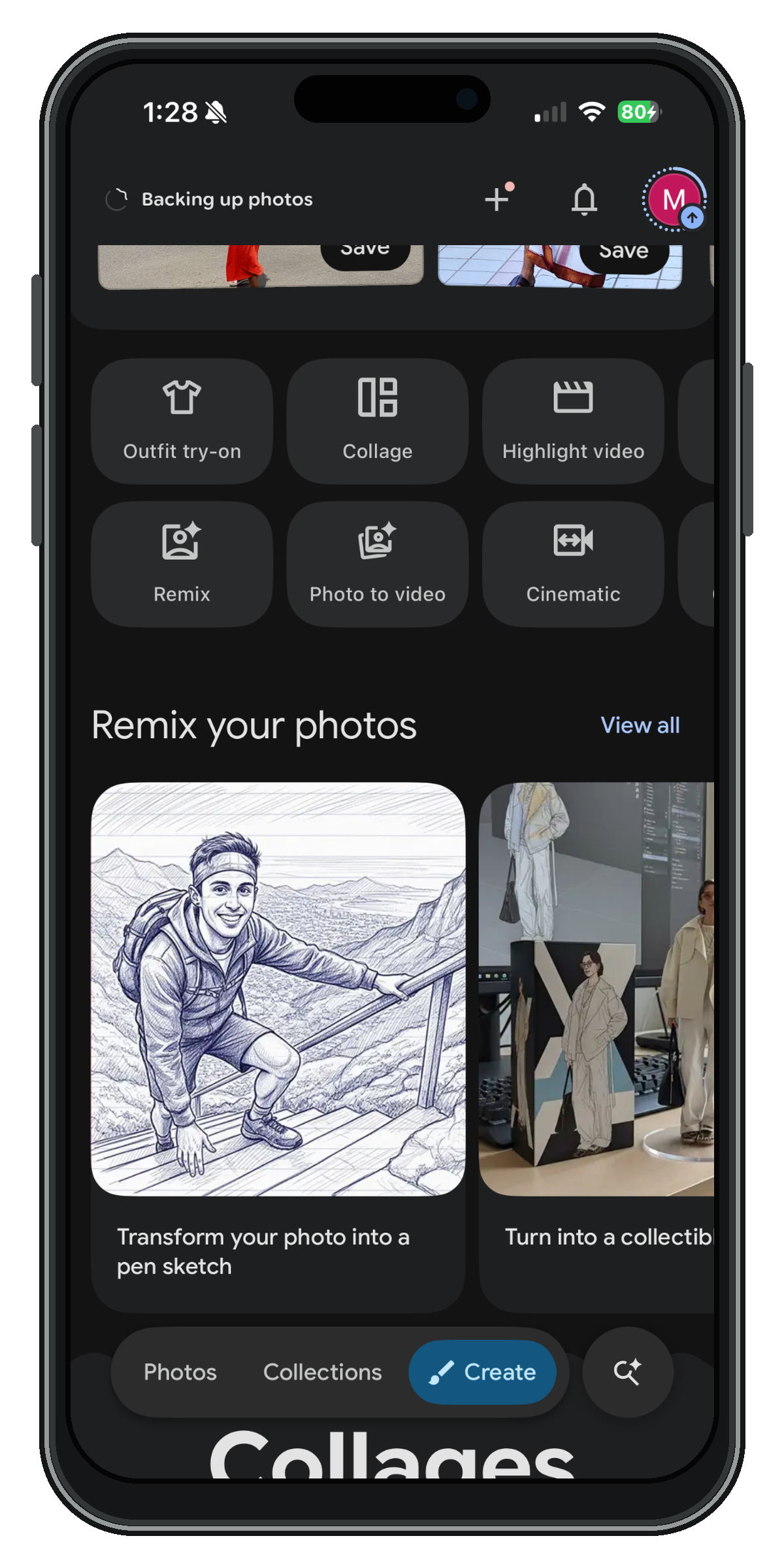
Google Photos Remix homeGoogle Photos Remix templates

Images show publicly available experiences for context. They don’t represent the confidential work or recommendations from these engagements.

What we tested

We evaluated emerging AI features including Remix and Find by Face, observing how participants in an Asian country understood the concepts, where they saw everyday value and what made each experience feel worth returning to.

Nuances we found

Participants gravitated toward a different mix of creative and discovery features than U.S. audiences. Those differences helped the team distinguish broadly useful behaviors from preferences shaped by local context.

Zilker Trail INTERNAL POV

Experience AI

A reusable framework for evaluating whether AI products are ready for real human adoption.

FrameworkThought LeadershipHuman-centred AI

Developing an AI experience checklist

I developed this framework by synthesizing academic research on human-centered AI, patterns from my client work, and hands-on review and experimentation with features created by industry experts and leading AI companies.

01 User Buy-in

Whether people understand, trust and feel ready to adopt the experience.

TRUST · EXPLAINABILITY · ACCURACY
02 Ease of use

Whether AI helps people reach an outcome, retain control and recover from errors.

UTILITY · AGENCY · RECOVERY
03 Scalability

Whether the experience can work responsibly across cultures, abilities and contexts.

CULTURE · BIAS · ACCESSIBILITY
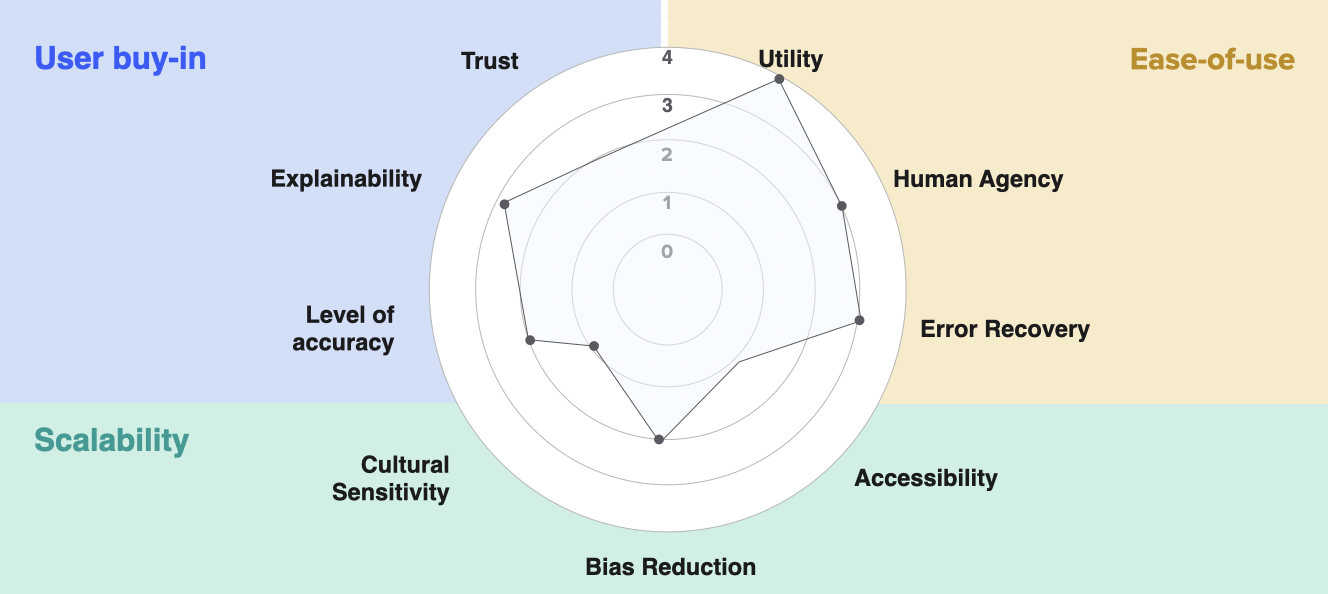
Experience AI radar chart scoring a product 0 to 4 across nine criteria grouped into user buy-in, ease of use and scalability
An example audit: each product is scored 0–4 on nine criteria, so gaps in buy-in, ease of use or scalability are visible at a glance.

Why it mattered

It gave teams a common language for asking whether a technically capable feature was also understandable, controllable and inclusive.

Adoptability before novelty.

02
PRACTICE AREA

Global and Longitudinal Research

Mature products often carry assumptions shaped by the markets where they were first developed. Testing them internationally helped me see how language, value, trust, mental models and feature priorities shift by region, while separating universal usability issues from local expectations. Across these projects, I learned how much meaningful localization depends on understanding regional nuance, not simply translating an interface.

Google Photos GOOGLE PHOTOS

International UX panel

Recruiting and operating a qualified panel based in an Asian country for recurring research.

LongitudinalRecruitmentInternational audience

Recruitment was a research problem

English fluency, device settings, generational mix and response quality all required careful manual verification, not just a screener.

Recruitment process

REACHED 2002
QUALIFIED 442
INTERESTED 285
RECRUITED 91
TOOLS FOR PARTICIPANT RECRUITMENT
Respondent Reach audiences in an Asian country and screen for qualified participants.
Instagram Ads Targeted recruitment by region, age, and gender in an Asian country.
Qualtrics Screen participants that have shown interest via Reddit, Instagram, and referrals.
Google Forms Intake participant interest and collect media for quality checks.
TOOLS FOR PARTICIPANT MANAGEMENT
Google Sheets Manage participant info, incentive lists, and survey scheduling with collaborative formatting.
Google Gemini Useful for data reorganization and finding specific patterns.
Google Contacts Centralized management of weekly emails to the panelist group.
UserTesting Run weekly tests with formatted exports.
Google One GOOGLE ONE

Multi-country plan testing

Research across the U.S., India, Brazil and South Korea for student pro plans.

LocalizationComprehensionInternational audience

What I investigated

Identify how people interpreted plans, value and benefits across markets and distinguish universal comprehension issues from market-specific expectations.

Consulting Challenge

Translate varied cultural and product contexts into a synthesis that preserved nuance without overwhelming stakeholders.

Comparable does not mean identical.

03
PRACTICE AREA

End-to-end experience improvement

Across mature products, I combined evaluative research, competitive analysis, accessibility testing and UX audits to reveal where an experience lost clarity or confidence.

{{ p.kick }}
{{ p.alt }}

{{ p.title }}

{{ p.body }}

{{ p.insight }}

Images show publicly available experiences for context. They don’t represent the confidential work or recommendations from these engagements.

MY CONSULTING PRACTICE

A repeatable way of working, even when the problem changed.

While the industries and methods shifted, the underlying practice stayed consistent: frame the decision, choose the right evidence, create shared understanding and help the team move.

{{ p.kick }} {{ p.title }}

{{ p.body }}

THE THROUGHLINE

I learned to enter a new domain quickly, earn stakeholder trust and make research useful at the moment a team needed to choose what came next.

Work shared at a high level. Client names appear only for publicly launched features, and confidential details are redacted or changed.

BACK TO TOP ↑