Wider before narrower
Generates quick layout and flow variations from a brief, so I can compare directions side by side.
Frame the problem from research, pick the direction worth pursuing and push it past the generic.
I research AI products for a living, so I hold the tools I use to the same bar. In design, AI helps me explore more directions before committing to one, turn ideas into working prototypes people can actually click, and keep design systems consistent as they grow. In research, it takes on the repetitive, high-volume work so I can spend more time with people and evidence.
If AI surfaces a pattern, I go back to the raw quote or session before it reaches a client deck.
Time saved on formatting and first drafts goes back into more sessions, sharper questions and better craft.
AI can produce ten layouts in a minute. Choosing the one that fits the people, the product and the system is still the design work.
I trained as an industrial designer, so I like testing ideas with something people can hold. AI lets me jump from sketch to working prototype quickly.
Generates quick layout and flow variations from a brief, so I can compare directions side by side.
Frame the problem from research, pick the direction worth pursuing and push it past the generic.
Turns my designs into working prototypes with Claude Code and Cursor, and explains the logic behind the code as we go, so I learn how to get things done myself.
I’m not a coder, but people react more honestly to something they can click than to a static mock. I define the interactions and edge cases, then test with real users.
Audits screens against the design system, drafts component documentation and checks contrast against WCAG.
Own the system’s logic, like the 44 atomic components I built at Window Nation, and the exceptions.
Powers the experience itself, like the interactive AI elements that help Gen Z build financial capability at Capital One.
Design for trust: when the AI speaks, how it explains itself and how people stay in control.
I wrote every line of copy and created every asset on this site, and shaped them around the story I wanted to tell: a designer who works from evidence and cares about craft. AI was how I executed that vision, turning my direction into layouts, interactions and code, while what to say and how it should feel stayed with me.
Designing AI-powered moments inside a banking app for a generation that’s skeptical of both banks and bots.
READ THE CASE STUDY →AI can generate options, but it can’t tell me which one is good. That judgment comes from watching other designers work, studying how they make decisions, and looking well beyond UX to industrial design, architecture, film and print.
My industrial design training taught me to notice proportion, material and detail. I keep building that eye the slow way.
At Zilker Trail I run multi-month studies with hundreds of participants across five countries. AI helps me keep that volume organized without flattening the nuance that makes global research worth doing.
Drafts screener variants, flags leading questions in discussion guides and checks translated tasks for clarity.
Set the research questions, pilot every guide with real people and adapt it with local partners.
Reorganizes weekly survey exports in Gemini and spots missing responses or drop-off across the panel.
Moderate sessions, build rapport with panelists and decide when a study needs to change course.
Clusters de-identified notes into candidate themes and pulls supporting quotes across markets.
Check every theme against the source, catch cultural context the model misses and write the final insight.
Reads findings from a structured Research.md file, so product and engineering tools can reference real user evidence.
Decide what goes in the file, how confident each insight is and what it should and shouldn’t be used for.
Client names and details in screenshots are redacted to protect confidentiality.
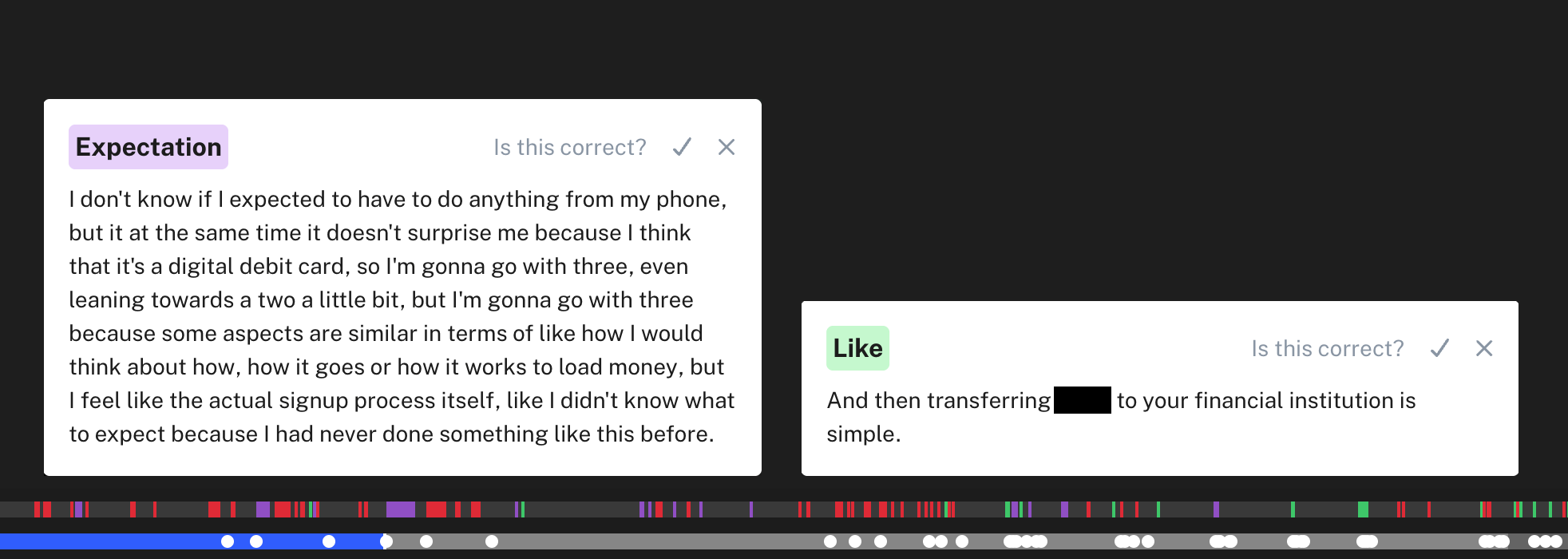
AI marks sentiment across every session (likes, frustrations, expectations) so I can jump straight to the moments that matter in hours of video.
But I review every tag. A model reads the words, not why someone said them or how a comment connects to another part of the experience. That “why” is usually the insight.
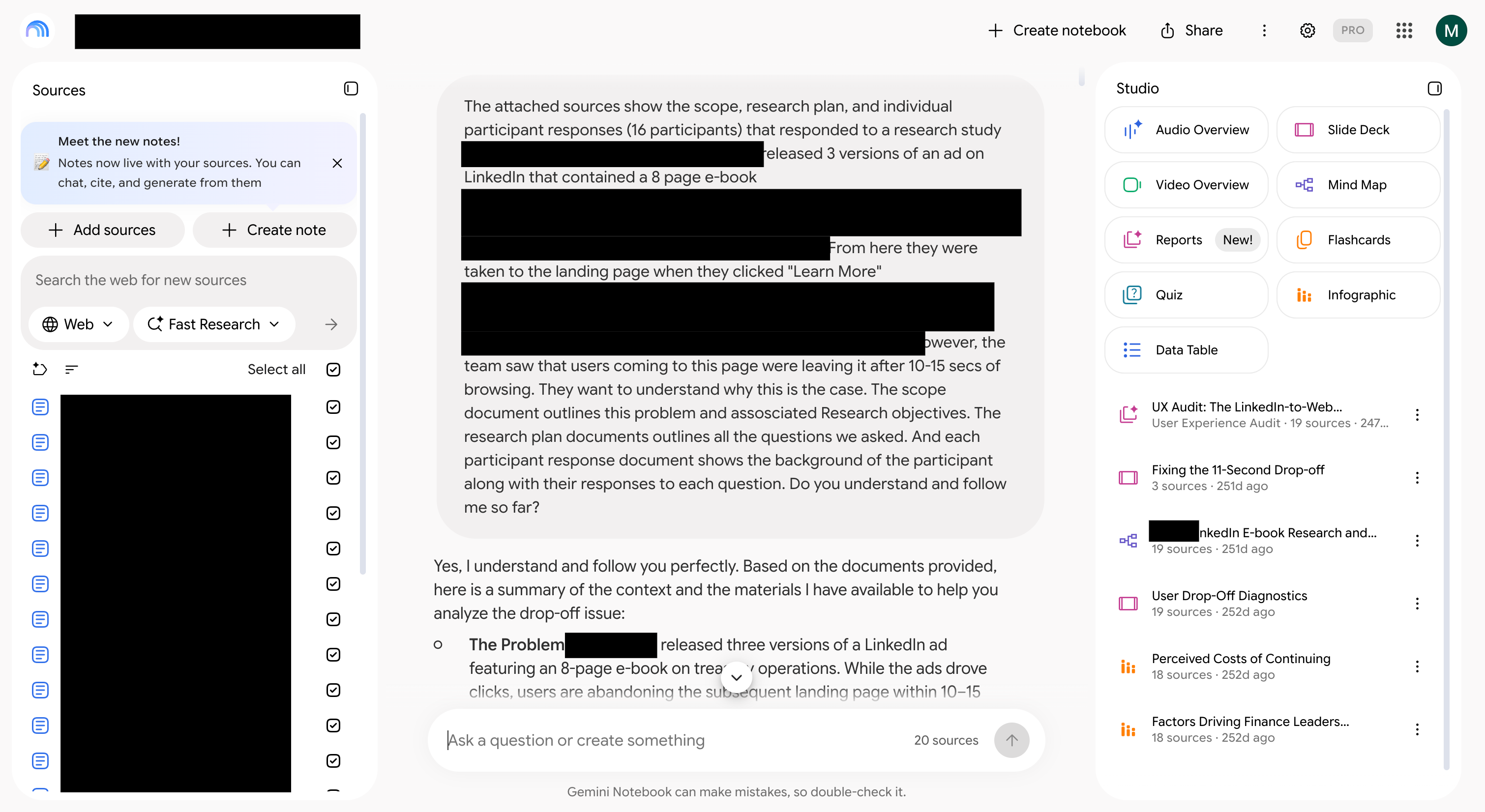
I upload every source on its own: the scope, the research plan and each participant’s responses. Then I open with a prompt that walks the model through the study and checks it understands before any analysis begins.
Client names and details in screenshots are redacted to protect confidentiality.
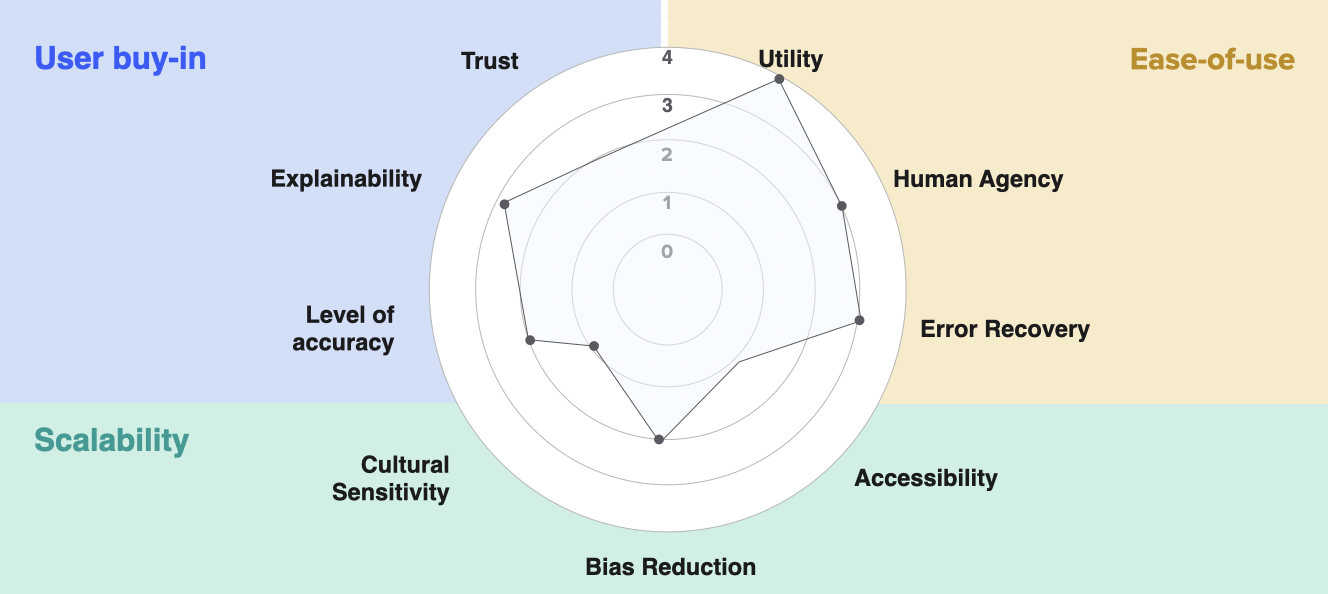
The other side of the coin. I built this framework to audit AI experiences across products, scoring each one from 0 to 4 on nine criteria grouped into buy-in, ease of use and scalability across cultures.
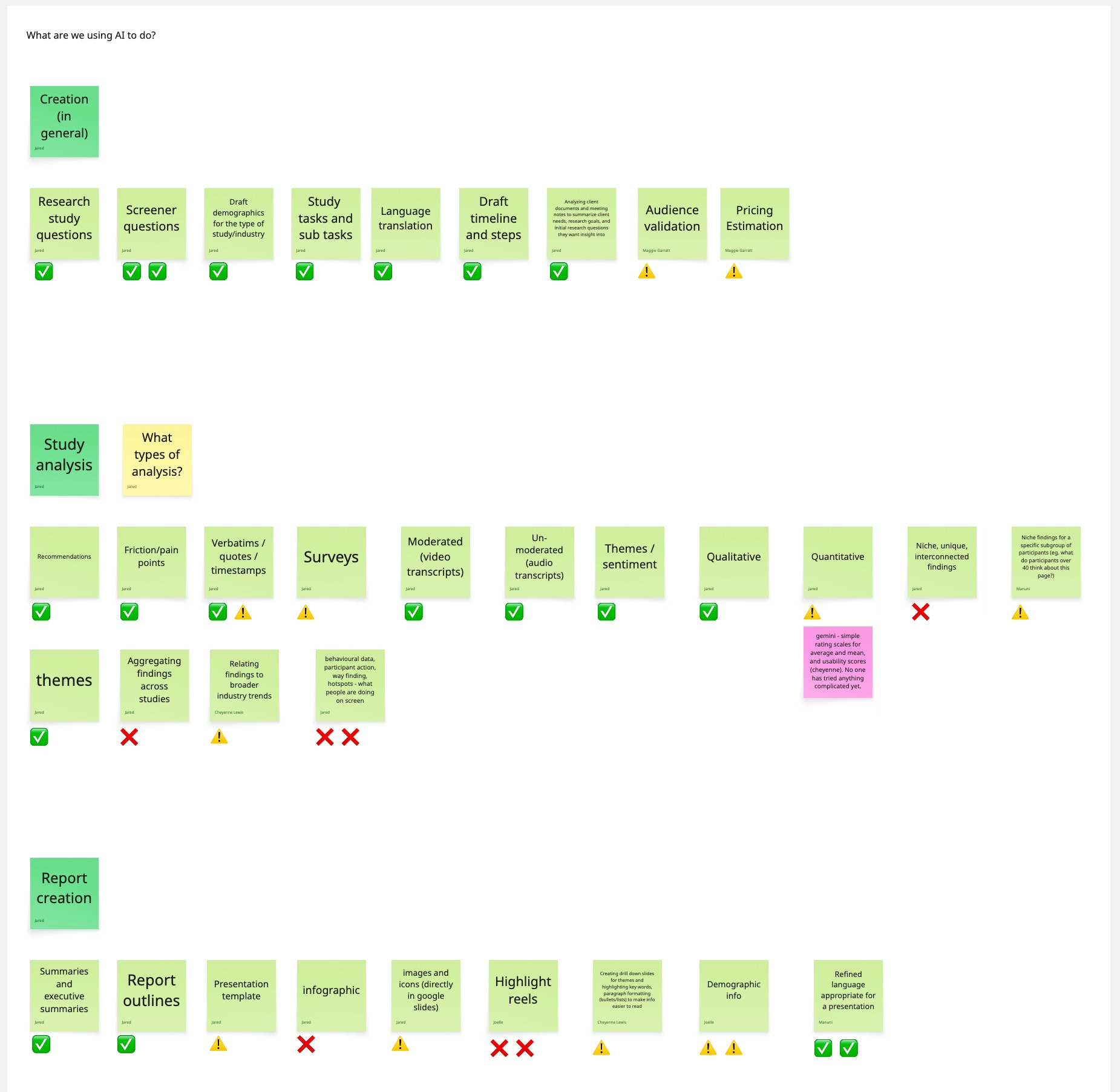
SEE IT IN THE ZILKER CASE STUDY →Every month our research team shares new tools, tips and what’s gone wrong. We map each task across creation, analysis and reporting, and mark where AI is trusted, where it needs care and where it fails.
I never ask AI to write an insight. I form my own point of view from the findings first, then use AI only to refine the wording.
Tools I’ve experimented with and kept in my daily workflow.